
Notes on the Wilderness
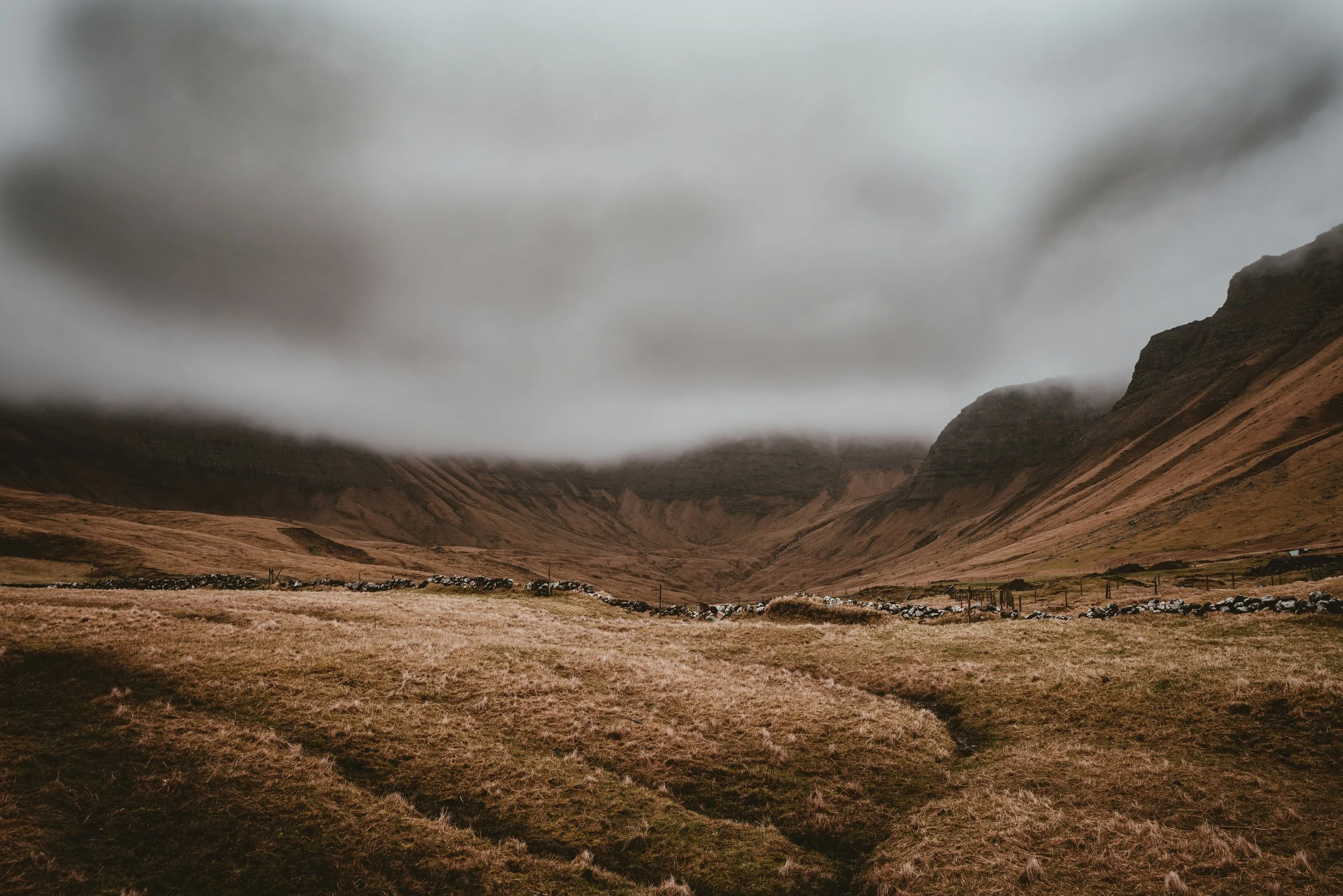
I recently attended Richard Rohr’s Revisioning conference in New Mexico—a gathering centered around a big, unsettling question: “What do we do with Christianity?”
For nearly twenty years, my own spiritual path has wandered through that very wilderness. What do I do with my faith now? How do I carry the pieces that no longer fit and the parts that still feel like home?
And maybe you don’t spend much time thinking about that question at all. If so, stay with me—because this isn’t just about Christianity. It’s about the wilderness seasons we all face.
One of the most unexpected takeaways from the conference was a simple question: Who is my mystic?
During the event I found myself in workshops with a few of my teachers—Jewish mystic Mirabai Starr and contemplative Christian guide James Finley. Each of them carries a lineage of wisdom: Mirabai speaks casually about how Ram Dass and Pema Chödrön shaped her life, while Finley spent years under the gentle, luminous spiritual direction of Thomas Merton.
We don’t always choose our guides. Sometimes our guides choose us. (There’s definitely a Yoda quote in there somewhere.)
The Wilderness of Faith
Everyone who showed up to that conference, I suspect, came because they, too, felt somewhat lost in their own spiritual desert. One speaker observed that American Christianity seems to be splitting at the seams—some doubling down into nationalism and rigid certainty, others leaving altogether because of it. And then there’s that whole group in the middle quietly asking, “What about me?”
So what is the answer?
Perhaps the wilderness is the answer. Maybe the spiritual path isn’t about collecting solutions but about expanding into larger, more spacious expressions of what it means to be human.
The Holidays and the Wilderness
My own family isn’t in great shape for the holidays this year. I could trace the reasons, tell the stories, explain the dynamics—but maybe you already know your own version of that. The holidays aren’t always a big, glittery celebration. This Thanksgiving, in particular, felt heavier than any I’ve known.
I missed my mom—a lot. She died in 2020 after a long journey with Alzheimer’s, and grief has its own strange way of showing up long after we think we’ve “accepted” something. It arrives in waves, unannounced, unapologetic.
In the middle of all that, I stumbled across this quote from Francis Weller:
“The work of the mature person is to carry grief in one hand and gratitude in the other and to be stretched large by them.”
This, to me, is the wilderness of the holidays—the liminal space where grief and gratitude coexist. We don’t get to choose one or the other. We don’t always get answers, tidy narratives, or clarity on demand. Sometimes all we get is the empty, quiet desert and the hope that a voice—any voice—will guide us forward.
Back to the Mystic Question…
If you’re wondering who my mystic is, it’s someone whose voice keeps resurfacing in my life: Brennan Manning. His fierce and tender trust in God’s love continues to steady me.
He reminds me that God’s love is for the bent and bruised, for those of us shifting the heavy suitcase of grief and gratitude from hand to hand. God’s love is for the bedraggled, the beat-up, the burnt out. For the weary and discouraged. For anyone straining to hear a whisper of hope in the wilderness.
And so may we know this today.
That even in the absence of the voice—even in the dark nights when the wilderness feels endless—the love of God is not gone.
It is here.
In compassion for ourselves.
In tenderness toward one another.
In the quiet spaciousness where grief and gratitude stretch us open enough to hear something new.